When the marginalised speak out, the fight of urban agriculture groups to belong in a neoliberal society
Abstract
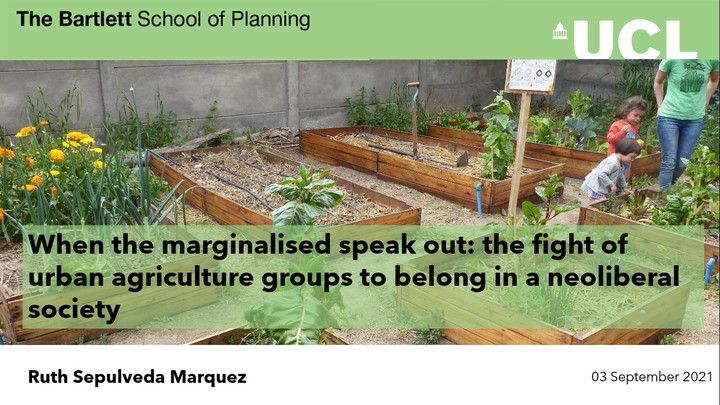
Urban agriculture reveals not only the interest of citizens to reconnect with nature but also their growing activism in a society that isolates them. Gardens have become a symbol of resistance to a neoliberal system that generates unstable environments by prioritising economic growth over the protection of nature. Local activism is changing and shaping the connections between residents and actors by emphasising cooperative and altruist practices in gardens. Their critical perception of society and their use of neglected spaces prompt them to reflect on their position as urban residents and question who has the right to alter the spaces. Due to their relegated position in society and asymmetric relationship with the State and private sector, urban agriculture projects are used as platforms to raise awareness about social, economic, and environmental problems. This paper analyses the main networks and discourses formed by actors involved in the development of urban agriculture in Santiago, focusing on the role of the actors in the networks and the reasons for the relationships. Through a case study approach with Santiago as the main research area, the study is based on the interviews of 19 groups. This paper argues that urban agriculture projects provided social connections and education rather than food, responding to the social deficiencies observed in the community, and therefore, they connected with actors that facilitated their social and environmental objectives. For them, gardens were spaces of resistance to neoliberalism, and empowerment of residents through social and environmental education and critical thinking.